Sophie Stitches
  • EarlyPeriod
    • Viking
    • Greek & Roman >
      • Roman Accessories
      • Romans on Film
    • Ireland (5-11th C.)
  • 11th C
  • 12th C
  • 13th C
    • 13th C Men
    • 13th C Women
    • 13th C Spanish
  • 14th C
    • 14th C Men
    • 14th C Women
  • 15th C
    • 15th C Men
    • Houppelande (1400-50)
    • Burgundian Gown (1450-80)
    • Italy: Gamurra & Giornea (1470-90s)
    • Hispano-Flemish (1480-1530)
  • 16th C
    • 16th C. Men
    • 16th C. Elizabethan Comfort Gown
    • 16th C. Italy >
      • Italy: Venetian Dress (1550-90s)
      • Italy: Florentine Gown (1500-25)
      • Italy: Working Class Dress (1575-1600)
    • 16th C. German >
      • German-Saxon Cranach Gown
      • Landsknecht
    • 16th C. Dutch (Belgium, Netherlands)
    • Flemish Working Women
  • Misc.
    • Middle Eastern Garb
    • Heraldic Garb
    • Russian Garb
    • Tribal Bellydance Garb
    • Sewing & Patterning Basics
    • Fabric & Pattern Suppliers
  • AS50

16th C:  Early German-Saxon (Cranach) Gowns

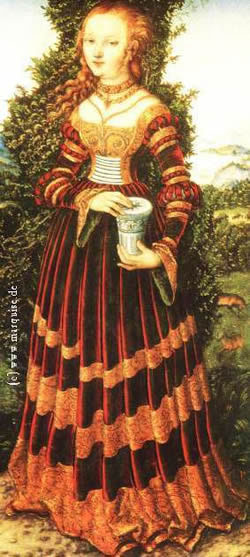
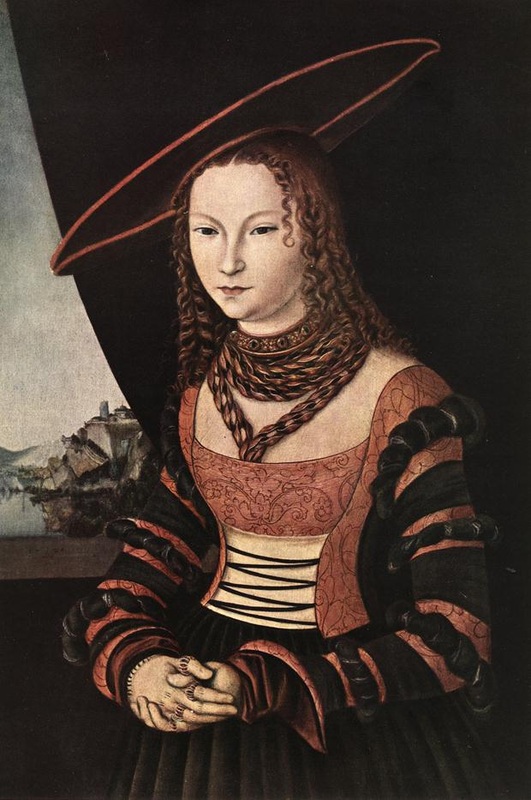
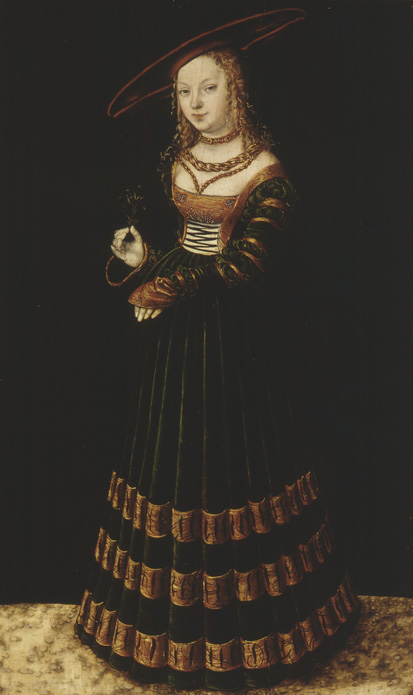
Gowns of early 16th Century German-Saxon gowns made popular by the paintings of Lucas Cranach the Elder.

Picture
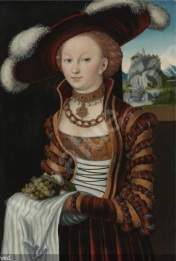
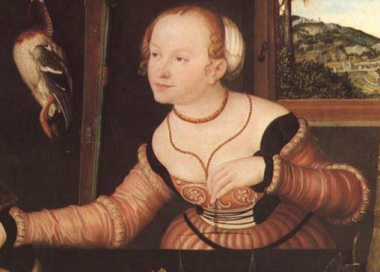
c. 1472 - Portrait of a Young Lady Holding Grapes, Cranach the Elder

In this, and several consecutive paintings, you can really see the white gloves with the slashing at each finger - except the middle finger! I can't see the detail well as I would like, but it looks to me as though the "bustruck" is pinned over the white piece and under the bodice.

Picture
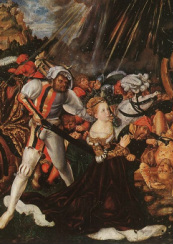
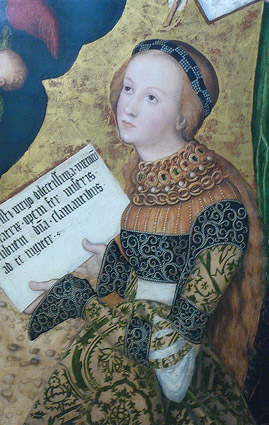
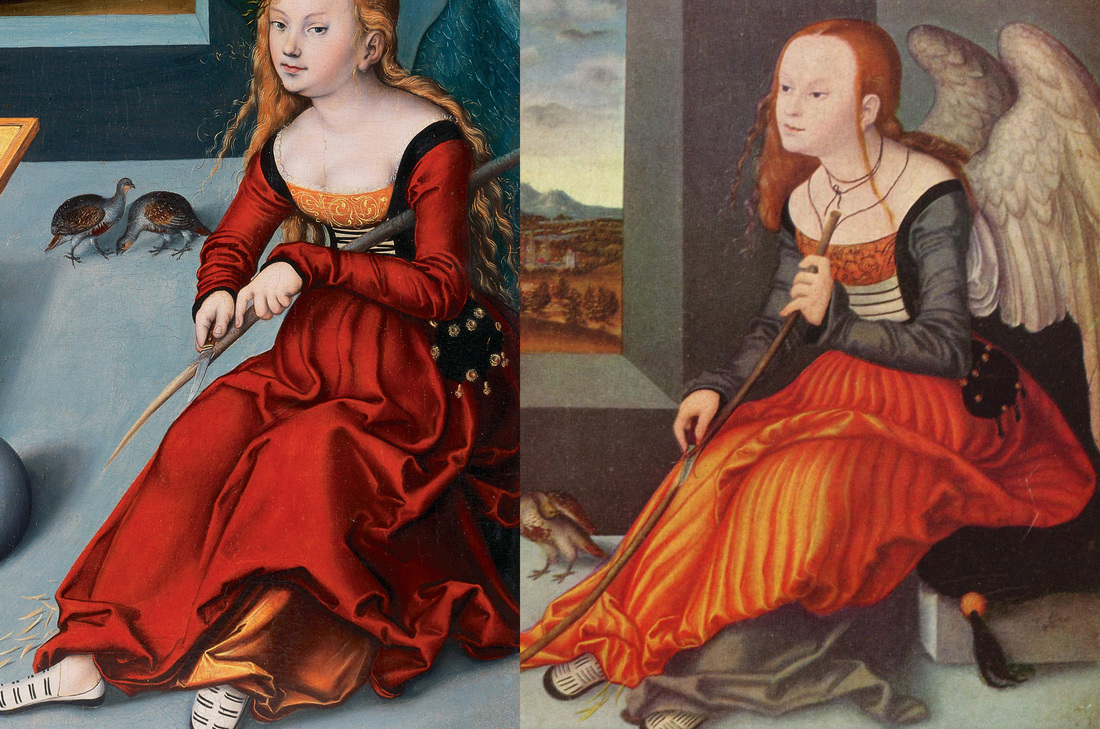
c.1505 - The Martyrdom of Saint Catherine (detail), Cranach the Elder

The bodice of this dress is very different from the style we are used to. Look carefully over her shoulders to see a very sheer chemise with a "sweetheart" neckline (as some theories think of the line visible later in images) or perhaps a partlet (my opinion) that is tucked into the bodice. Also, this gown also has only 1 guard stripe at the bottom - and it's impractically white - but this is unique because most are gold and the same contrasting color as the rest of the gown.

Picture
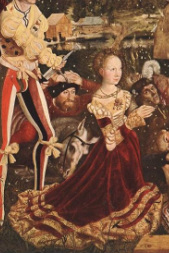
c. 1506 - The Martyrdom of Saint Catherine (detail), Cranach the Elder
The V-neckline is what is generally considered that sheer chemise (ie my partlet, pinned under the bustruck).  Also note that the bustruck is sitting a LOT higher on her body/bust than later versions which look more like a tube top.
Picture
c. 1508 - Housealtar of count William II of Hessen (detail) Cranach the Elder
Picture
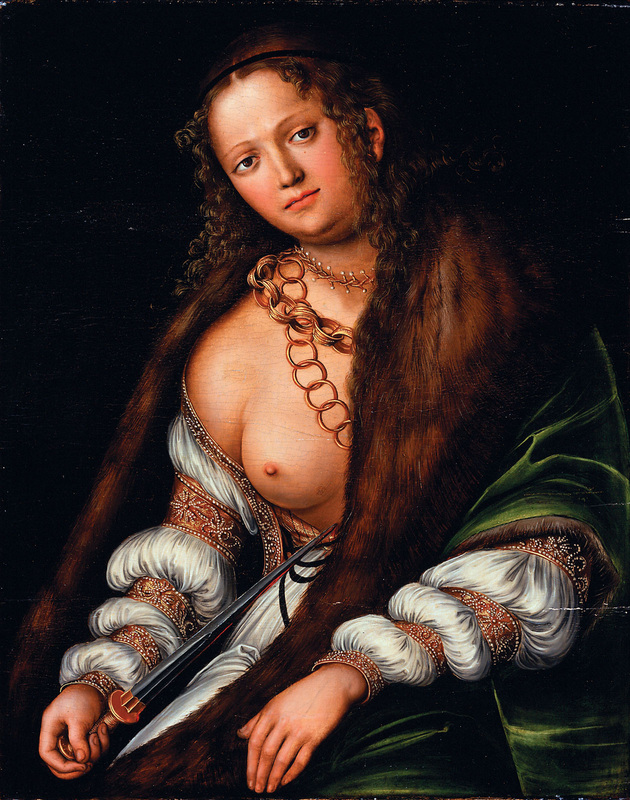
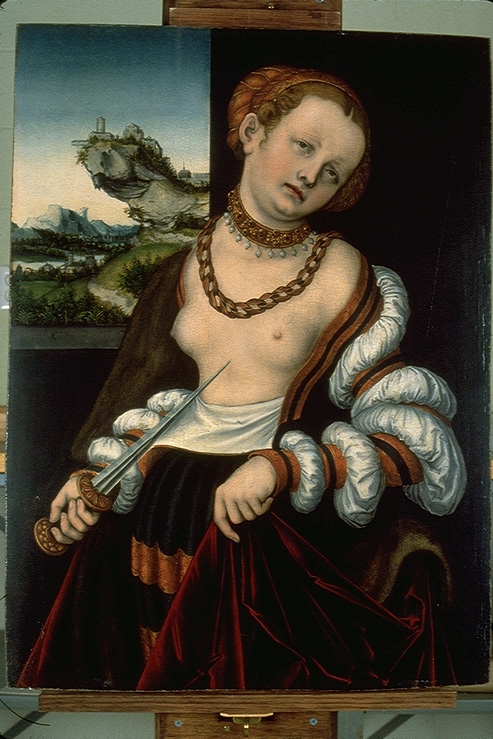
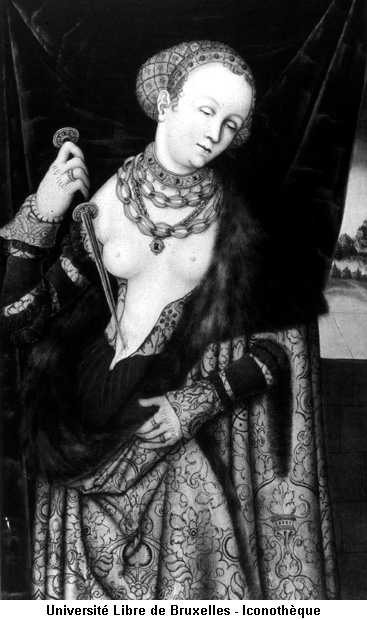
c. 1512 - Lucretia.
So, a few things to note here about this painting.  1. The white sleeves look as though they are definitely sewn into the guards/gown proper and not a seperate chemise.  Also note at the waistline that the white chemise is not warn under the part that is flapped over (the top of the bodice) - does that make sense?

Picture
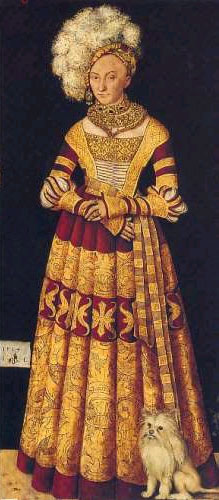
c. 1514 - Portrait of Duchess katharine of mecklenburg
Picture
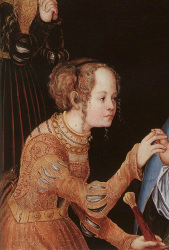
c. 1516 - The Mystic Marriage of St. Catherine (detail)
Picture
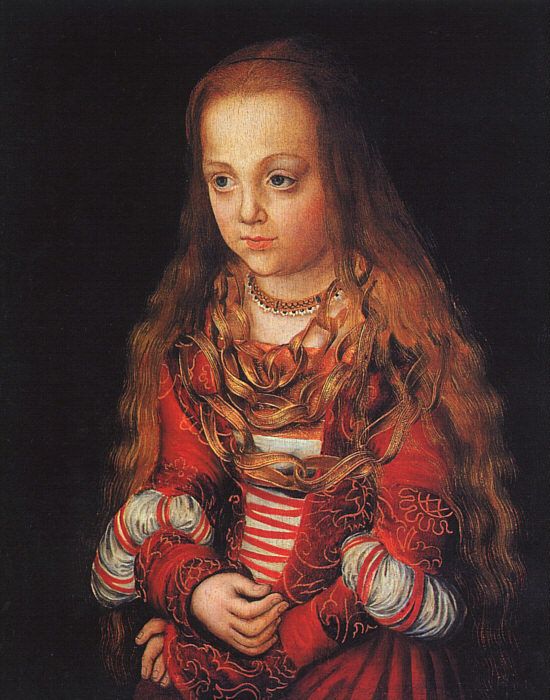
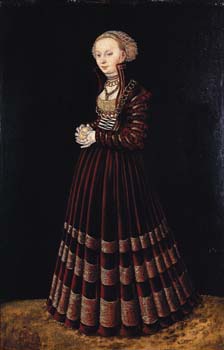
c. 1517 - A Princess of Saxony, Cranach the Elder
This is one of two (?) gowns of this style that I have seen with lacing that is NOT black (the other is gold).  Here it is obviously a wide silky ribbon that is spiral laced across the gown.  Also note that in this gown that bustruck also appears to be higher on her chest- not the tube top.
Picture
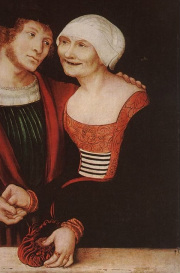
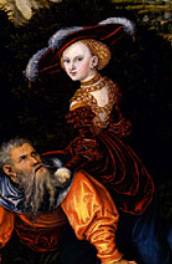
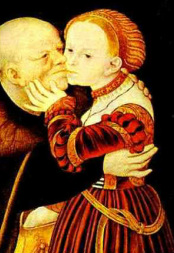
c. 1522 - Amorous Old Woman and Young man (detail), Cranach the Elder
This is one of the paintings that makes me think that the white part of this ensemble is not a chemise, but a separate piece of fabric, and white to show off the lacing.  Here's why:  look at the detail of the pleats on the men's clothing - particularly the detail paid to every tiny ruffle and fold of his shirt.  Now look how the white part of her gown is perfectly flat.  I don't consider this to be a lack of detail, but that white piece has GOT to be flat, anyone who has laced up over a chemise knows that no matter how fitted it might be, it's just not going to lay flat like that.  Also, the ties on this gown are parallel to one another and do not appear to be spiral laced, but perhaps laced with 3 separate laces tied in the way many detatched sleeves are - but don't ask me where the ends are.   And here's another thing that I noticed - look just below the bustruck.  there seems to be a section of darker line - now I don't think this is the artist drawing a thicker line, I think this is another lacing that is mostly covered by the bustruck, and that the lacing goes all the way up to just under the bust.
Picture
c. 1525 - Saint Magdalen
Picture
c. 1525 - St. Helena with the True Cross, Lucas Cranach the Elder
Picture
c. 1525 - Mary Magdalene, Lucas Cranach the Elder
Picture
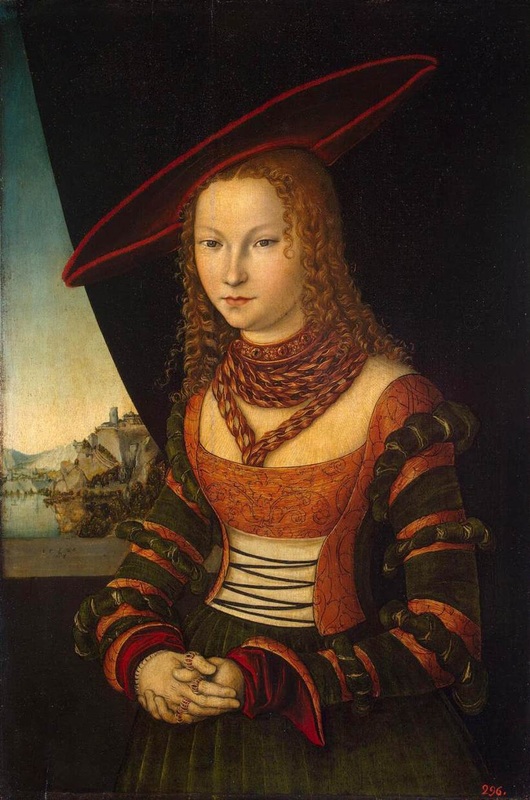
c. 1526 - Portrait of a Lady, Cranach the Elder
Picture
c. 1526 - Portrait of Margareth von Ponickau
Picture
c. 1526 - Portrait of a Girl with Forget-me-nots, Lucas Cranach the Elder
Picture
c. 1527 - Lady with an Apple, Cranach the Elder
Picture
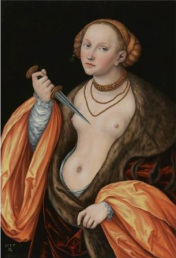
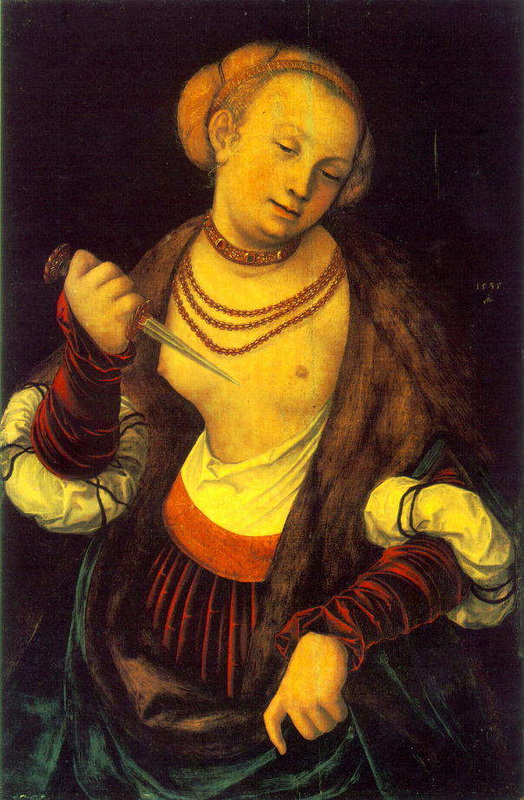
c. 1529 - Lucretia Committing Suicide, Cranach the Elder
Picture
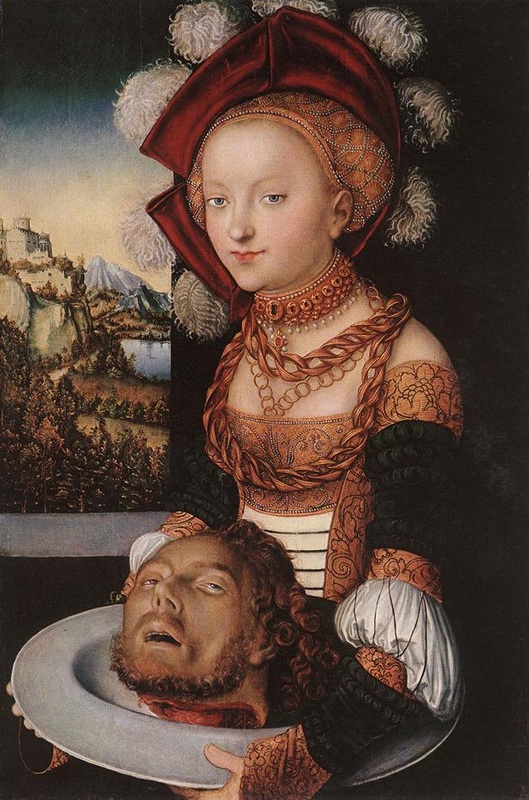
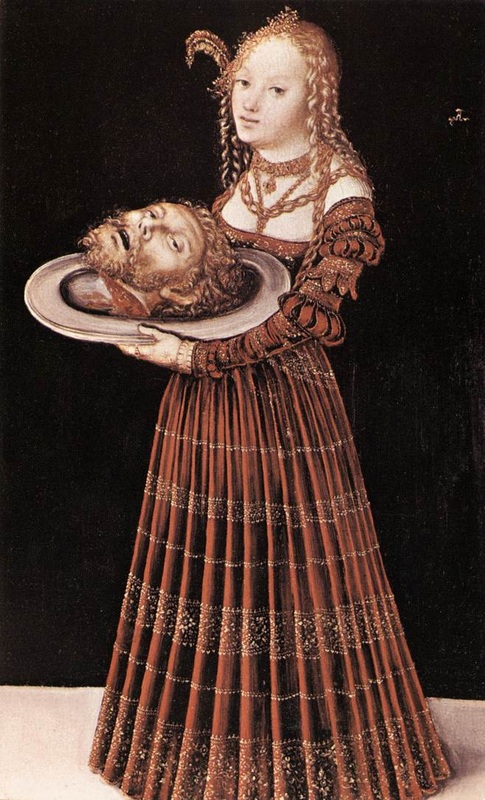
c. 1530 - Salome, Cranach the Elder
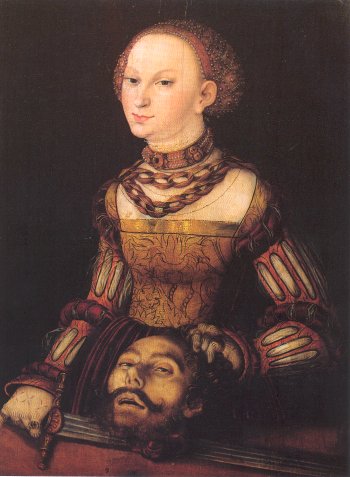
So here's an example of the almost sweetheart neckline that in some paintings people consider to be the neckline of the chemise, but here it is clearly a metal chain, worn under the bigger heavier chains.  Also, note how the bustruck starts at the lower position, but also extends maybe 2 inches below the bust - longer than most of the "tube top" concepts.  She also has parallel laces and I am in love with her headcovering.  I'm also in love with her sleeves, but note that some of the green is slashed, and some is not, and also you can't see any white through the slashing.
Picture
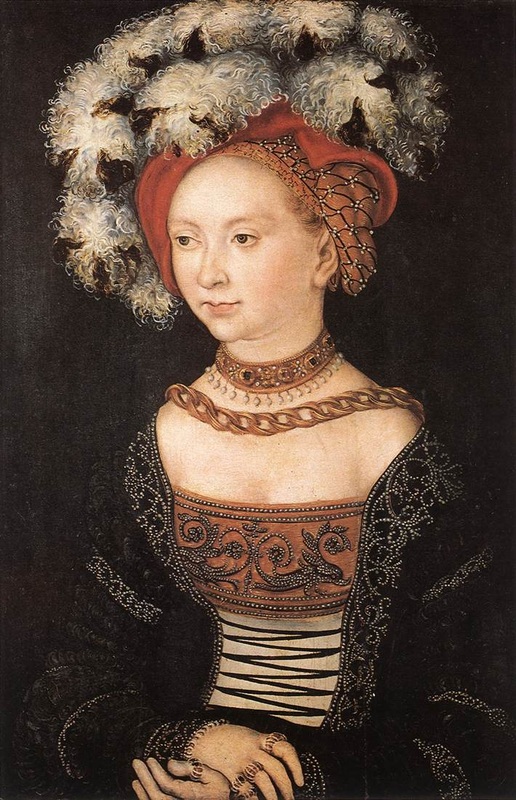
c. 1530 - Portrait of a Young Woman, Cranach the Elder
Picture
c. 1530 - Phyllis and Aristotles (detail), Lucas Cranach der Altere
Picture
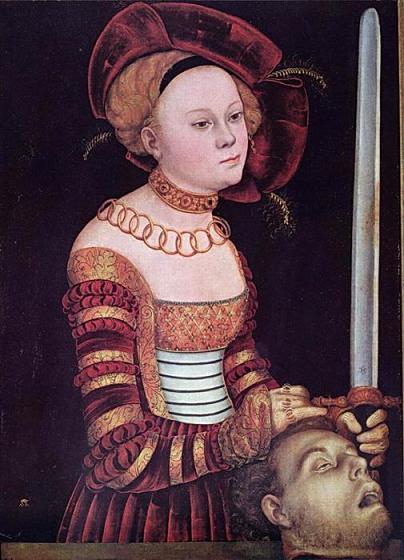
c. 1530 - Judith with the Head of Holofernes, Lucas Cranach the Elder
Picture
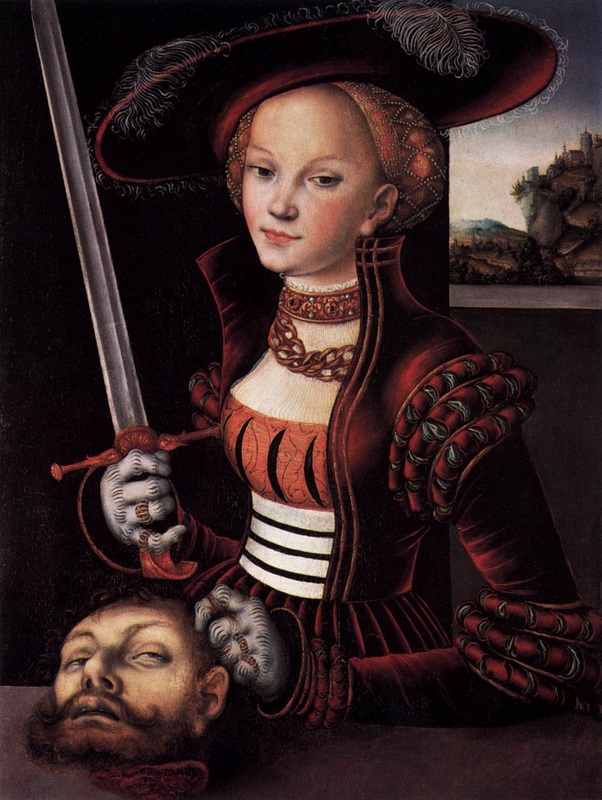
c.1530 - Judith Victorius, Lucas Cranach the Elder
Picture
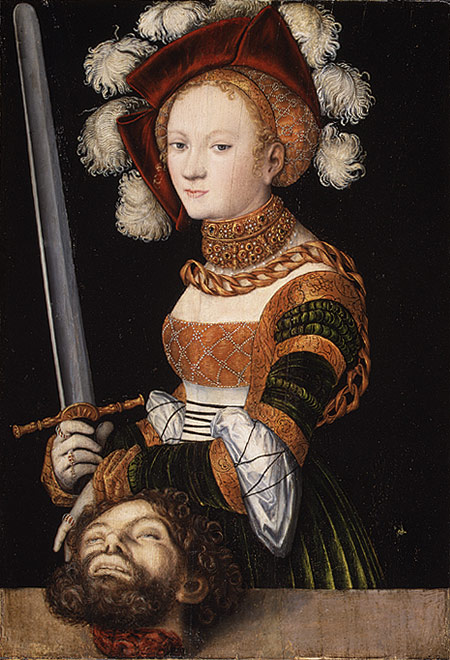
c. 1530 - Judith with the Head of Holofernes, Lucas Cranach the Elder
Picture
c. 1530 - Judith with the Head of Holofernes, Cranach the Elder
Picture
c. 1531 - Judith with the Head of Holofernes
Picture
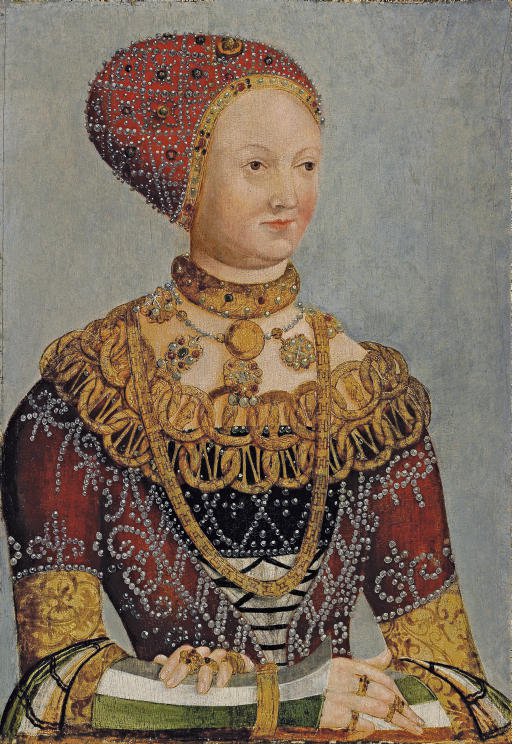
c. 1531 - Sybille von Cleve, Hans Baldun
Picture
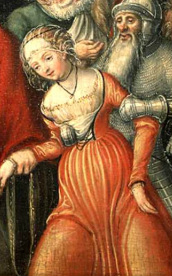
c. 1532 - Christ and the Adulteress (detail) by Lucas Cranach the Elder
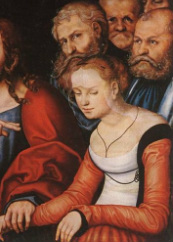
This woman is clearly of a lower class since she has those black guards, not opulent gold, and very very simple sleeves (with belled cuffs lined in black, it appears.  The sweetheart line exists in this painting , but here we see that the white (chemise?) goes all the way up under the bustruck's placement, and the lacing is spiral laced all the way up under the bust (though obviously, would be laced from the top down).  Still, with all those lovely wrinkles in her sleeve fabric, how on earth is that "chemise" so perfectly flat?  I'm wondering if it's a back-lacing kirtle or something?
Picture
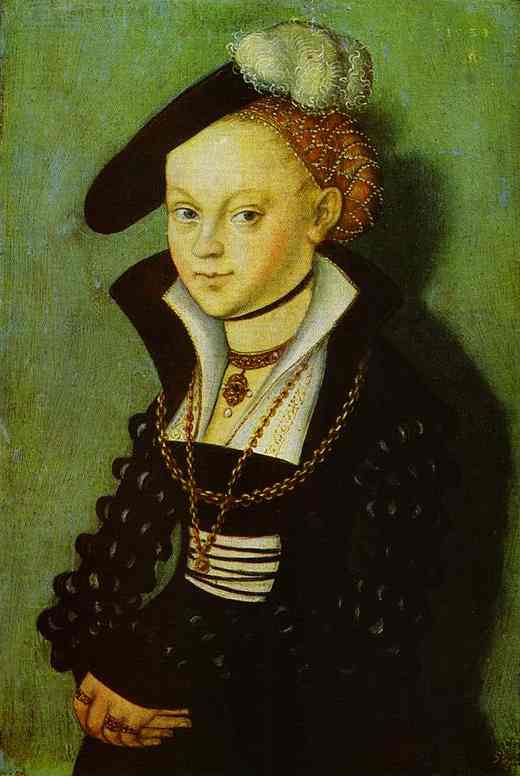
c. 1534 - Portrait of Christiana Eulenau, Lucas Cranach the Elder
Picture
Princess Emilia Krell
Picture
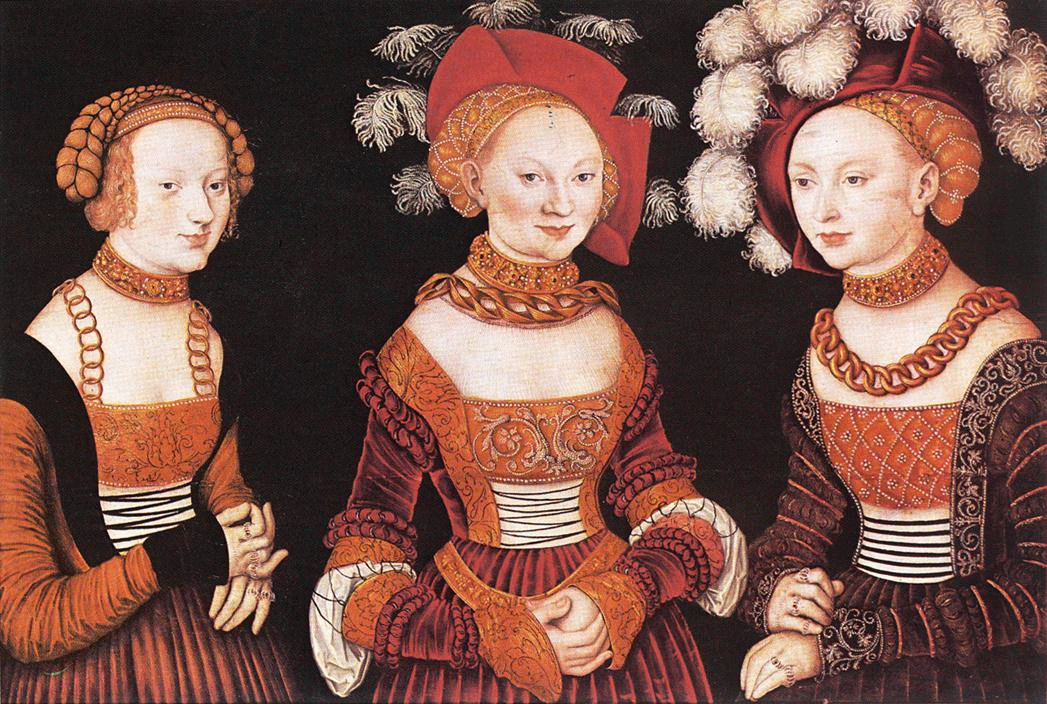
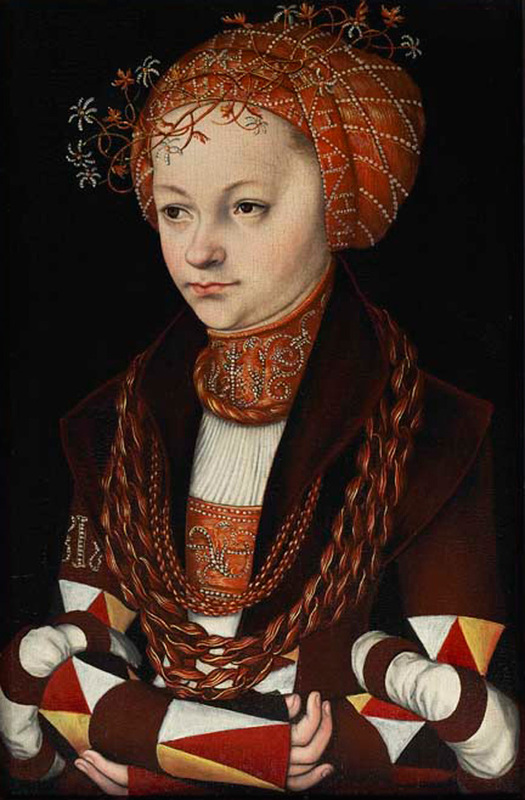
c. 1535 - The Saxon Princesses (Sibyl, Emilia and Sidonia of Saxe), Lucas Cranach the Elder
Picture
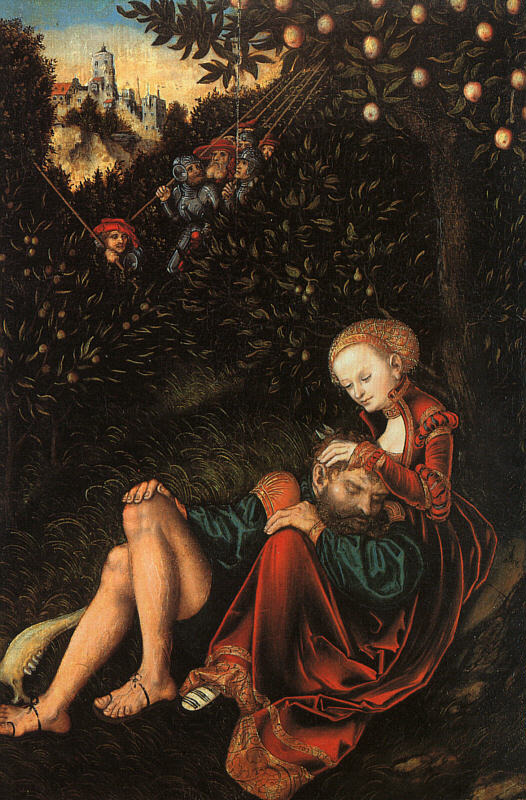
c. 1529-30 - Samson and the Lion, Cranach the Elder.
Picture
c. 1540 - Portrait of a young Girl, Cranach the Elder
Picture
c. 1546 - The Fountain of youth (detail), Cranach the Elder
More Gowns, but I don't know the dates...
Picture
unknown date and artist.
Picture
unknown date and artist.
Picture
date and artist unknown.
Picture
date unknown. Lucretia, by Lucas Cranach II.
Picture
Cranach, date unknown.
Picture
unknown date.
Picture
Picture
unsure of date or painter
A VERY high-necked chemise for ultimate modesty.  Also notice the rings on the fingers - again, not on the middle.
Picture
unknown date and artist.
Picture
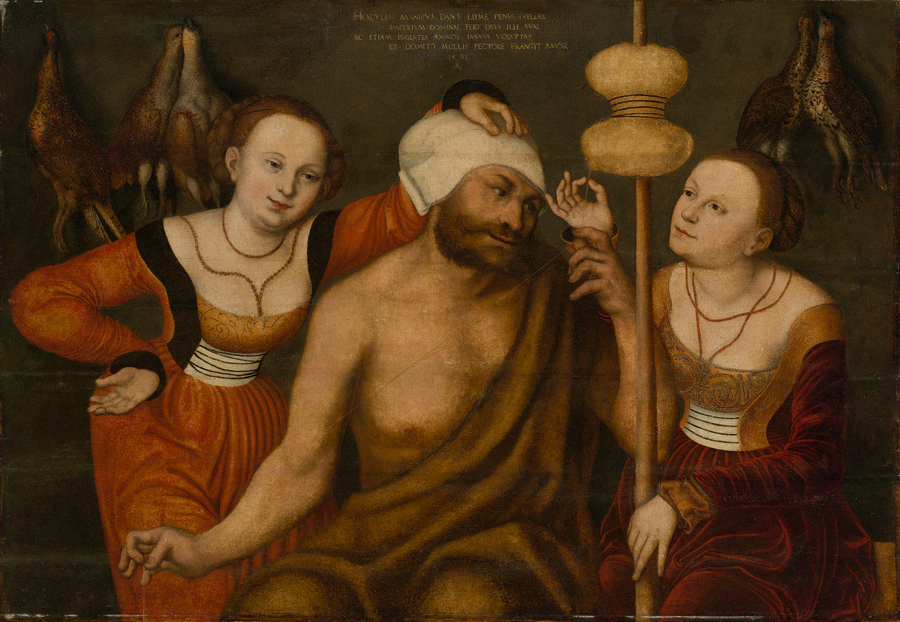
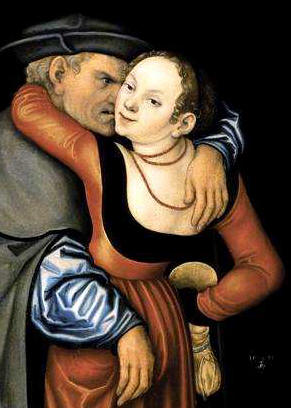
date unknown. Old Man and Young Woman, Cranach the Elder.
Picture
uknown date and artist
Picture
date unknown. Salome withthe Head of St. John the Baptist, Cranach the Elder.
Picture
The Ill-Matched Lovers
Picture
Picture
Picture
date unknown. Christ and the Adultress.
One of the fewer images of the back of this gown style, though this seems to be worn on a lower (ie middle) class woman - note the undecorated sleeves and the black guards rather than gold.  This skirt is also less fully pleated, and appears to be pretty obviously sewn into the bodice.  The lower "necklace" may be a line of the very sheer chemise.

Picture
Picture
Picture
Picture
Picture
compilation of images from: http://tistfa.files.wordpress.com/2010/09/colors.jpg
Picture
Picture
Picture
Picture
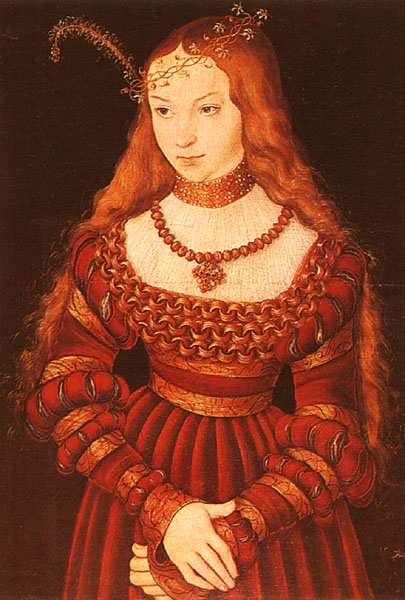
painting by Hans Baldung.
Picture
Picture
painting by Hans Krell
Picture
Picture
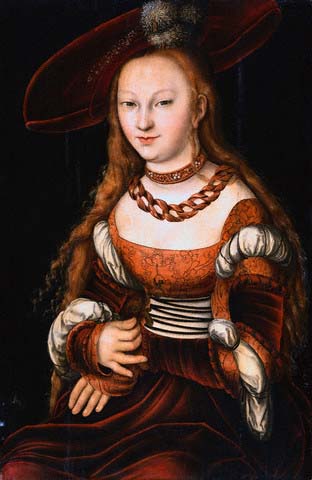
Sybille (in red)
Picture
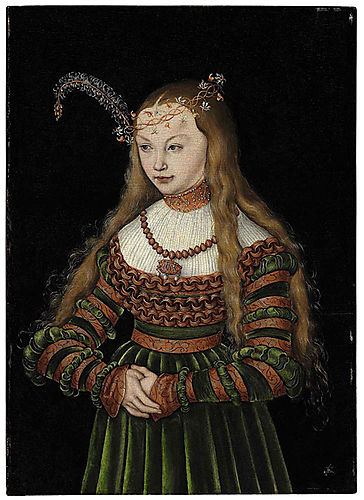
Sybille (in green)
Middle & Working Class Women (Non-Court)
Picture
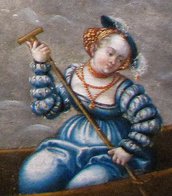
Hunting (2)
Picture
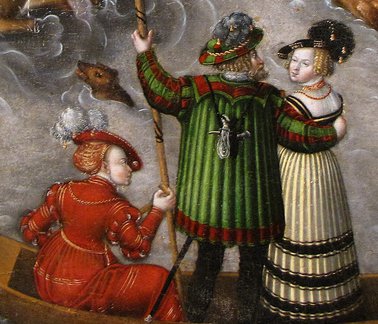
Hunting

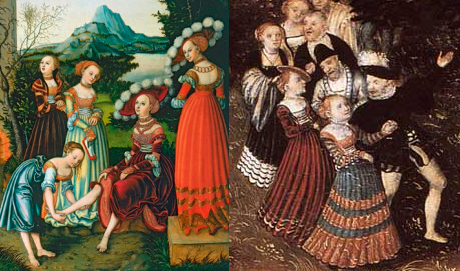
Non-court garb, note the different colors and black guards instead of brocade

Picture
Christ Blessing the Children (2) Detail
Picture
The Fountain of Youth
Picture
One of the fewer images of the back of this gown style, though this seems to be worn on a lower (ie middle) class woman - note the undecorated sleeves and the black guards rather than gold. This skirt is also less fully pleated, and appears to be pretty obviously sewn into the bodice. The lower "necklace" may be a line of the very sheer chemise.
Picture
Christ Blessing the Children

Links:

General
  • The Friesian Frock Girl: Costume in Saxony - great analysis of several paintings - and proof that this wasn't just a dress of Cranach's imagination!
  • The Friesian Frock Girl: Middle and Working Class Saxon Women - yes, there is a difference!
Patterns & How-To:
  • Reconstructing History: Early 16th c. German Saxon Gown Pattern - on Etsy

Costume Blogs
  • Hartwood Castle:  1530s Saxon Gown
  • Crimson Vision: Cranach's Magdalena - probably the best recreated gown in this style ever.  Tracy is AMAZING!  Also see a write-up on her how-to on the Festive Attyre site HERE.
  • Naergi's Costuming Site: Cranach Gown - Has a great STUDY page with an interesting, different theory on the construction of this gown, but also follow along her progress on each element of the ensemble.
  • Fröhliche Frau: Cranach Gown
  • Research Dumping Grounds - a collection of research images and analysis, along with the shapes of the patterns, etc.

In Film:

  • The Period Movie Review: Mary's Cranach Dress (from The Other Boleyn Girl)
Powered by Create your own unique website with customizable templates.